
SSSC Is Rewriting Its Fitness to Practise Rules. Here's What Could Change.
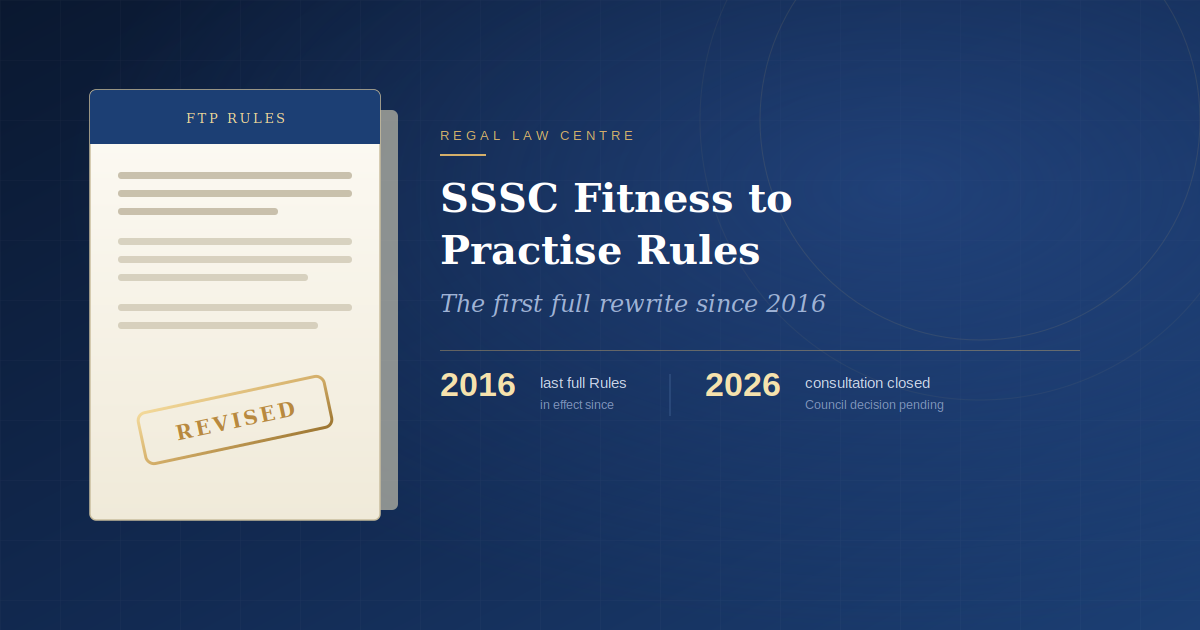
SSSC Is Rewriting Its Fitness to Practise Rules. Here's What Could Change.
If you work in social care in Scotland, or you're an employer who might one day need to make a referral, there's a quiet but significant change underway at the Scottish Social Services Council (SSSC). For the first time since 2016, the SSSC has consulted on a full rewrite of its Fitness to Practise (FTP) Rules, the rulebook that governs how concerns about a social service worker are investigated and how hearings are run.
This isn't a minor tidy-up. It's the rulebook that decides what happens to you if you're ever referred, so it's worth understanding before you need it.
Note: the SSSC recently restructured its website, and what was previously labelled "Fitness to Practise" is now grouped under "Dealing with Concerns." The process itself is unchanged, just the navigation.
What Actually Counts as a Fitness to Practise Concern?
Not every workplace incident gets referred, and the SSSC's own guidance gives some useful worked examples of where the line sits:
- A worker who swears at and uses excessive force against someone in their care would be investigated.
- A worker who is an hour late bringing someone a cup of tea, and is addressed on the spot by their supervisor, would not be investigated. That's treated as something the employer manages directly.
- A worker who doesn't take their epilepsy medication, doesn't tell colleagues about their condition, and then has a seizure that leads to someone being harmed would be investigated, because of the lack of insight and the risk it created.
- A worker managing a similar health condition responsibly, who tells their employer and adjusts their workload accordingly, would not be investigated.
The pattern is consistent: ongoing risk, lack of insight, or harm tends to trigger an investigation. A single, low-level incident that's properly managed by an employer usually doesn't.
Why Now?
The current Rules came into effect in 2016, with smaller updates added in 2017 (introducing Legally Qualified Chairs to hearing panels) and 2021 (creating an opt-in process for hearings). Since then, practice has moved on. The SSSC now routinely holds hearings online, something the original 2016 Rules never anticipated, and legal practice and procedure have shifted in ways the existing Rules don't fully reflect.
Rather than bolt on more piecemeal changes, the SSSC ran a public consultation from 3 November 2025 to 26 January 2026, asking workers, employers, universities, trade unions, lawyers and advice centres for their views on a consolidated set of new Rules. That consultation has now closed, and as of this writing the SSSC's consultations page shows no current open consultations, the next step is the SSSC publishing its proposal and outcome following the March 2026 Council meeting.
What's Actually Being Proposed
A few of the changes under consultation stand out for anyone who might go through this process:
- How much discretion the SSSC has over investigations. One proposed change to Rule 9.1 would let the SSSC decide the scope of an investigation itself, rather than being tied to a fixed objective standard. Representative bodies have asked for clearer guidance here, concerned that without it, proportionality won't be applied consistently.
- How mental health is handled. The proposals would expand the range of outcomes available in cases involving a worker's mental health, moving away from removal from the Register being treated as the default option. Bodies representing social workers have welcomed this but are pushing for an Occupational Health advisor to be routinely involved in such cases.
- Defining "unfit to plead." The Rules would introduce a formal definition for workers who are unfit to plead in proceedings, an area the current Rules don't clearly address.
- Timescales and updates. There's an ongoing concern, raised directly by representative bodies, about "procedural drift": workers are held to strict deadlines, but the SSSC itself isn't always held to the same standard. Expect this to be a live issue in how the final Rules are worded.
This Sits Alongside Other Recent SSSC Changes
The Rules consultation isn't happening in isolation. The SSSC separately revised its Decisions Guidance, the document that helps panels and staff decide what sanction fits a case, with updates that came into effect after a 2024 consultation. Among the changes: clearer guidance on conducting investigations in a trauma-informed way, more detail on how dishonesty is assessed, and a new reference to the professional duty of candour.
Taken together, this is the most significant overhaul of how SSSC fitness to practise cases are run in nearly a decade.
Why This Matters If You're Currently Facing a Referral
If you're already going through an SSSC investigation, or think you might be referred, the precise wording of these Rules will shape what happens to your case: how broad the investigation into you can be, what's said about your mental health if it's relevant, and how the panel weighs your circumstances. The rules a panel applies to you depend on when your hearing happens, not just when the allegation was made, so this is genuinely live information, not background reading for another day.
Separately, referrals to the SSSC have been rising. Year-on-year figures from this financial year point to a further double-digit increase in referrals. The encouraging news is that the SSSC has also been closing cases faster than before, but more referrals still means more people navigating an unfamiliar, high-stakes process at any one time.
What to Do If You've Been Referred
The SSSC will always have a solicitor representing its case against you. You're entitled to the same. Whether you're at the very start of an investigation or already facing a hearing, getting advice early matters, both for the substance of your case and for understanding which version of the Rules will actually apply to it.
If you've received an SSSC notification, a referral letter, or you're an employer unsure whether something needs to be referred at all, get in touch and we'll talk you through exactly where you stand.
Speak to us about an SSSC case: info@regallawcentre.com
Office: Regal Law Centre, Neo House, Riverside Drive, Aberdeen, AB11 7LH
Related Insights
Can You Still Fire and Rehire Staff on Worse Terms?
Section 28 of the Employment Rights Act 2025 locks down fire-and-rehire from later this year. Here's what's changing,...
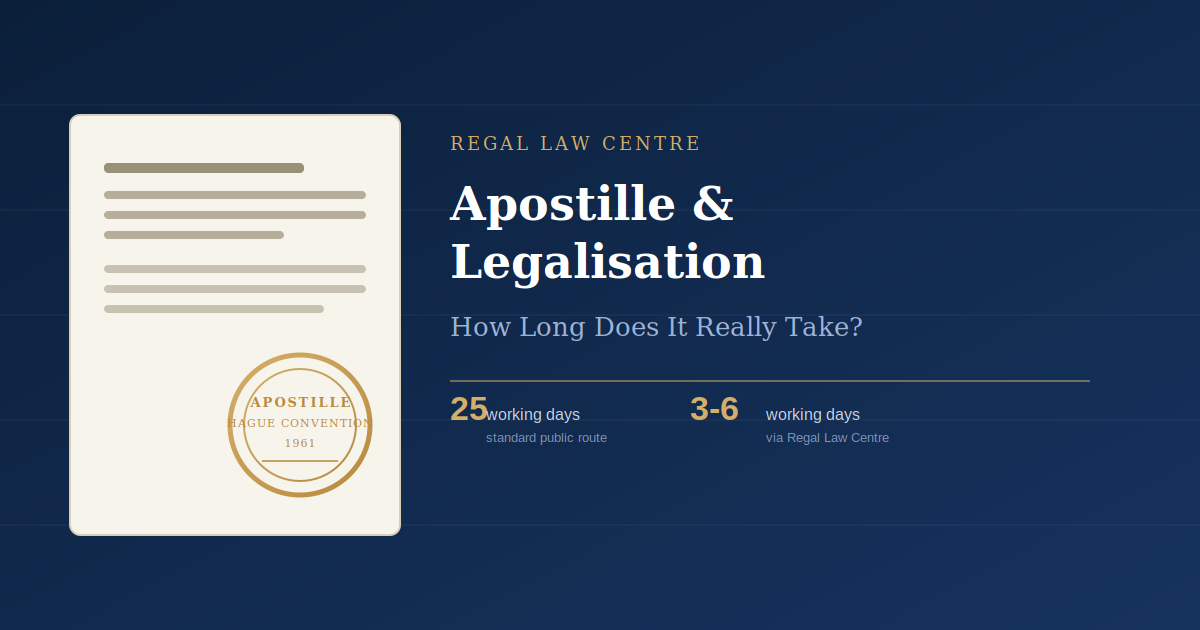
How Long Does It Actually Take to Apostille a Document in 2026?
The real FCDO apostille turnaround times for 2026 — from the 25-working-day standard public route to our next-day and...