
I've received a Temporary Order from the SSSC. What now?
A letter from the Scottish Social Services Council (SSSC) telling you it intends to impose a Temporary Order is one of the most stressful things that can happen to a social care worker. It can feel as if a decision has already been made about you.
It hasn't. Here's what a Temporary Order really is, and what you can do about it.
What is a Temporary Order?
A Temporary Order is a short-term measure the SSSC can put on your registration while it investigates concerns about you. It is not a finding that you did anything wrong. The SSSC itself says that allowing it to impose a Temporary Order does not mean you admit the allegations.
The SSSC can impose an order if it believes your conduct, practice or health has caused, or poses a risk of, serious harm, and the order is needed to protect the public, is in the public interest, or is in your own interests.
The two types of order
Temporary Conditions Order. You can keep working, but you must meet certain conditions, such as working under supervision. Your status on the Register stays the same.
Temporary Suspension Order. You cannot work in your registered role while it lasts, and your Register status changes to "Temporarily Suspended".
The SSSC can impose either type, or both.
The deadline you must not miss: 21 days
The SSSC will first send you a draft Notice of Decision. It sets out the allegations and why the SSSC thinks an order is needed.
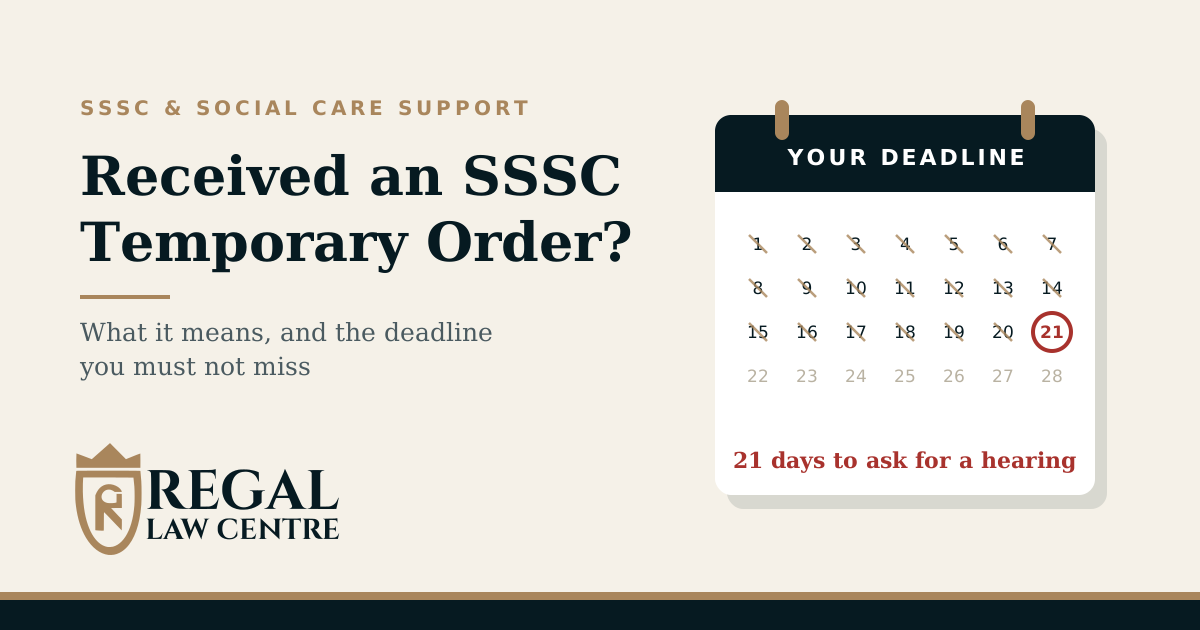
You then have 21 days from the date of the letter to tell your caseholder that you want a Fitness to Practise Panel hearing. A phone call or email is enough.
If you don't do anything, the SSSC will impose the order. The hearing is cancelled, and the final decision is sent to you and to your employer.
If you do ask for a hearing, an independent Panel looks at the evidence and decides whether an order is needed at all, and if so, what kind. You'll get a copy of the SSSC's evidence beforehand. Temporary Order hearings are held in private and are usually held remotely.
In the most serious cases, the SSSC can ask for a hearing at much shorter notice: within three or seven days.
How long does it last?
A Temporary Order can last up to two years. It can last longer if the SSSC is waiting for a police or court case to finish, or if your case has been sent to a full Panel hearing. The SSSC may also ask to extend an order if its investigation isn't finished, and you'll be asked whether you want a hearing on the extension.
You can also ask the SSSC to review or remove an order at any time, for example if your circumstances have changed.
Can I appeal?
Yes. You have 14 days from receiving the final Notice of Decision to appeal to the Sheriff Court. You keep this right even if you didn't ask for a hearing. Legal aid may be available for a Sheriff Court appeal, although it is not normally available for SSSC hearings themselves.
Will people find out?
While you're under investigation, there is no public marker on the Register. However, once a Temporary Order is in place, your name appears on the SSSC's list of current Temporary Orders, and your employer receives the decision.
What about my job?
With a conditions order, it's up to your employer whether it can put the conditions in place so you can keep working.
With a suspension order, you can't work in your registered role. Speak to your employer about whether a non-registered role is available while the order lasts. Get advice before you resign. Resigning doesn't end the SSSC investigation, and it can limit your employment law options.
What you should do now
- Note the date on the letter. Your 21 days start from that date, not from when you opened it.
- Read the draft Notice of Decision carefully. Are the facts right? Is an order really needed to manage the risk, or would less restrictive conditions do?
- Decide whether to ask for a hearing. Often it's worth asking for one, especially where a suspension is proposed and conditions might be enough.
- Gather evidence. References, supervision records, training certificates and anything else that shows you can practise safely.
- Get independent advice quickly. The SSSC recommends it, and with a 21-day deadline, time matters.
The bottom line
A Temporary Order is temporary, and it is not a finding against you. But silence counts as acceptance. If you think the order is wrong, or goes further than it needs to, the first 21 days are when you can do the most about it.
Regal Law Centre represents social care workers across Scotland at SSSC Temporary Order hearings and throughout fitness to practise investigations.
Book a consultation: info@regallawcentre.com Office: Regal Law Centre, Neo House, Riverside Drive, Aberdeen, AB11 7LH
This article is for general information only and is not legal advice. Correct as at 23 November 2026.
Related Insights
My employer dismissed me. Will they report me to the SSSC?
If you're dismissed for misconduct from a social care role in Scotland, your employer must legally tell the SSSC. Her...
Can You Still Fire and Rehire Staff on Worse Terms?
Section 28 of the Employment Rights Act 2025 locks down fire-and-rehire from later this year. Here's what's changing,...
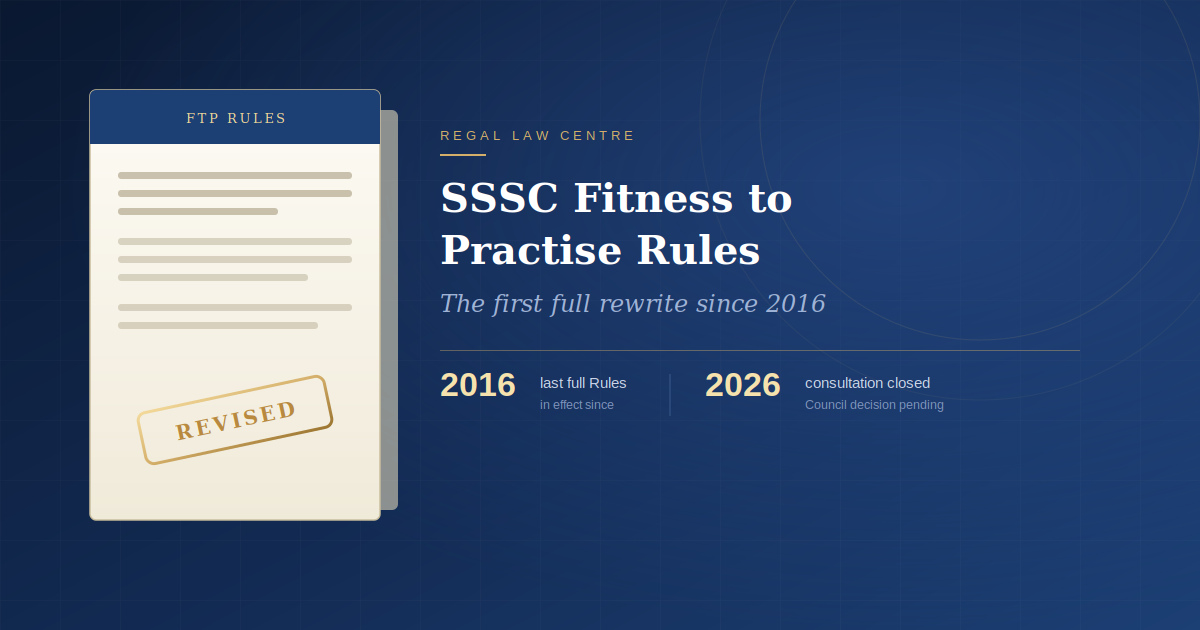
SSSC Is Rewriting Its Fitness to Practise Rules. Here's What Could Change.
The SSSC has consulted on its first full rewrite of the Fitness to Practise Rules since 2016. Here's what's being pro...